Choosing the right TV stand height is more important than many people realize. It impacts your comfort, your viewing experience, and even the style of your living space. If your TV sits too high, you might get a sore neck.
Too low, and you may find it hard to relax or see the screen clearly. While it seems simple, the perfect TV stand height depends on several factors—your TV size, sofa height, room layout, and personal preferences. Let’s explore everything you need to know to find the ideal TV stand height, whether you’re buying new furniture or adjusting what you already own.
Why Tv Stand Height Matters
TV stand height directly affects how comfortable you feel when watching television. If you’ve ever watched a movie and felt your neck start to ache, you know how important it is. The right height helps you avoid discomfort, eye strain, and even headaches. It also makes your living room look well-designed and balanced.
A common mistake is to focus only on style or the look of the stand. Some people choose low, trendy stands or tall, cabinet-style units without considering how they’ll actually watch TV. But functionality should come first. The goal is for your eyes to be in line with the center of the TV screen when you’re sitting down. This is how most experts and home theater designers recommend setting up a TV.
The Ideal Tv Stand Height Explained
The best TV stand height allows your eyes to be level with the center of the screen. For most people, this means the middle of the TV is about 42 inches (106 cm) from the floor. This number comes from studies of typical seated eye level for adults. However, it is not a rule that fits every situation. Your sofa height, TV size, and even your own height can change what works best.
Let’s break down how to find your personal ideal height:
- Measure your eye level when seated: Sit on your main sofa or chair. Use a measuring tape to find the distance from the floor to your eyes. For many adults, this is between 38 to 42 inches (97 to 106 cm).
- Measure your TV: Check the height of your TV (from bottom to top, not diagonal).
- Calculate the center point: Divide your TV’s height by two. This is the center of your screen.
- Find stand height: Subtract the TV stand’s base (if it has legs or a pedestal) and the center point height from your eye level. The number you get is the ideal stand height.
Example:
If your eye level is 40 inches from the floor and your TV is 24 inches tall, the screen center is 12 inches from the bottom. Your stand should place the bottom of the TV 28 inches off the floor (40 – 12 = 28).
Factors That Influence Tv Stand Height
No two living rooms are the same, and several factors can change the “perfect” height for a TV stand.
Tv Size
Larger TVs need lower stands, while smaller TVs can sit higher. This is because the center of a big screen sits higher up. For example, a 65-inch TV has a much higher midpoint than a 42-inch model. If you use the same stand for both, the center of the larger TV will be above your eye level, which can be uncomfortable.
Sofa Or Chair Height
Different sofas and chairs have different seat heights. Deep, low sofas put your eye level closer to the floor, so you’ll need a lower stand. Stiff, formal couches or recliners can raise your sitting eye level, so the stand can be taller.
Room Size And Layout
In small rooms, you might sit closer to the TV, which makes the angle more important. In large rooms, you may watch from different spots, so a slightly higher stand can help everyone see. Also, if the TV is in a bedroom or a playroom, the best height may be different from a living room.
Tv Mounting Style
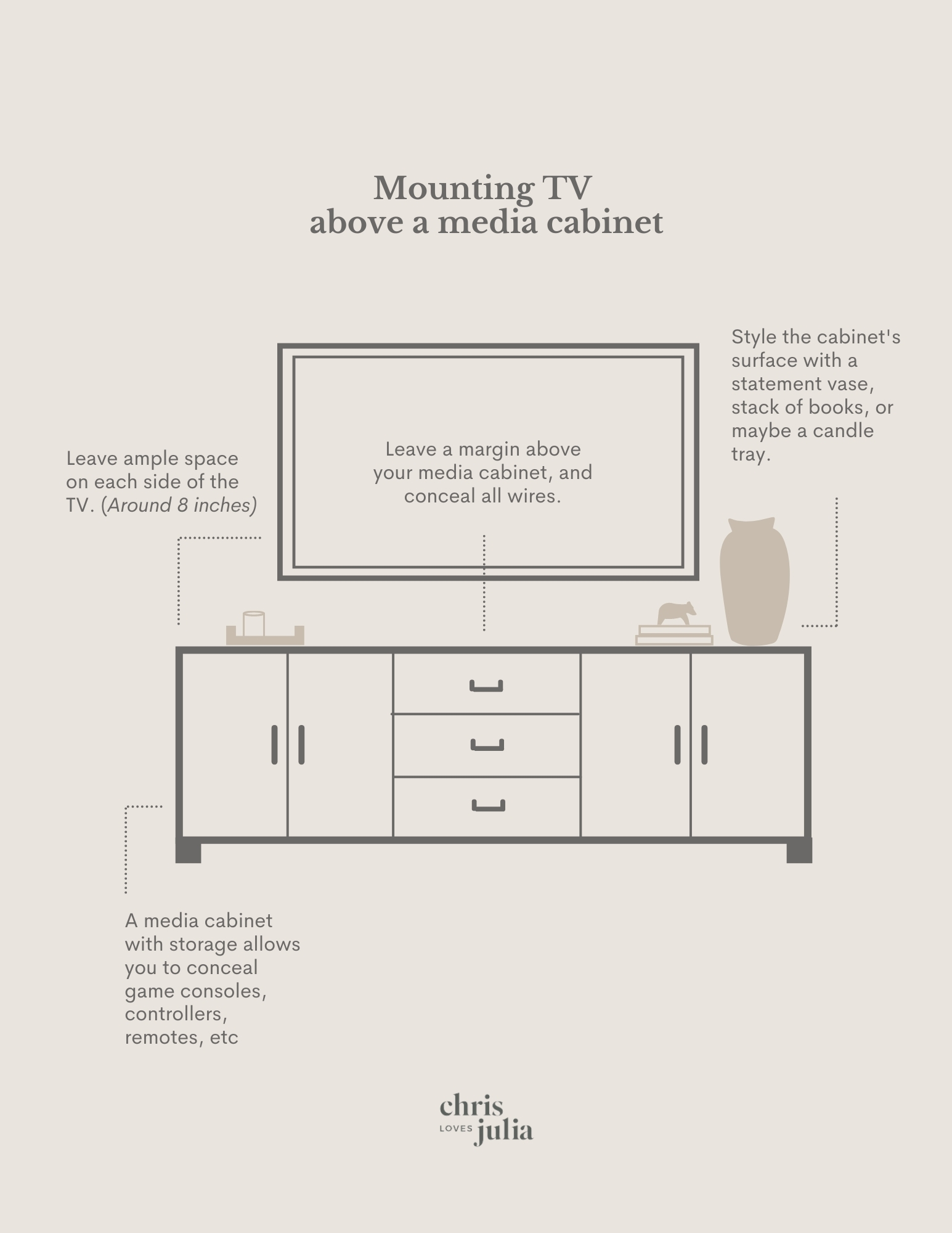
Some people use a TV stand, while others wall-mount their TVs. If you plan to mount your TV above the stand, you can use the stand for storage only. But if the TV sits directly on the stand, the height is critical.
Personal Preferences And Habits
Do you watch TV mostly while sitting, lying down, or standing? Families with small children may want a higher stand to keep the TV out of reach. People who use their TV for gaming often prefer the center of the screen slightly lower than eye level.
Common Tv Stand Heights By Tv Size
While personal measurement is always best, there are common stand heights used for different TV sizes. Below is a quick reference to help you compare.
| TV Size (Diagonal) | Recommended Stand Height | Why This Height? |
|---|---|---|
| 32 inches | 24–26 inches (61–66 cm) | Keeps center at seated eye level in most rooms |
| 43 inches | 20–24 inches (51–61 cm) | Prevents screen from being too high |
| 55 inches | 18–20 inches (46–51 cm) | Balances big screen with comfortable viewing |
| 65 inches | 15–18 inches (38–46 cm) | Places center near typical eye level |
| 75+ inches | 12–15 inches (30–38 cm) | Very large screens require lowest stands |
These numbers are only starting points. Always adjust for your room and furniture.
How To Measure For Your Perfect Tv Stand Height
Finding the best TV stand height is simple if you follow these steps:
- Sit in your favorite spot: Use your actual couch or recliner, not a dining chair.
- Measure your eye level: Hold a tape measure from the floor to your eyes.
- Measure your TV’s height: Not the diagonal—height from bottom to top.
- Divide TV height in half: This is the screen center.
- Subtract to find stand height: Eye level minus half the TV height tells you where the TV’s base should be.
Tip:
If you have a soundbar or speaker, include its height in your calculation.
Tv Stand Height And Viewing Distance
TV size and how far you sit from the screen affect your comfort. If you sit close, the TV may need to be lower so your eyes do not look upward. If you sit far away, the height matters less, but the TV should still be centered as much as possible.
Here’s a general guide to viewing distance and its effect on stand height:
| Viewing Distance | Best TV Size | Stand Height Adjustment |
|---|---|---|
| 4–6 feet (1.2–1.8 m) | 32–43 inches | Standard or slightly lower |
| 6–8 feet (1.8–2.4 m) | 43–55 inches | Standard height |
| 8–10 feet (2.4–3.0 m) | 55–65 inches | Standard or slightly higher |
| 10+ feet (3+ m) | 65+ inches | Can be a bit higher |
Insight:
Many people choose a bigger TV for a large room, but forget to lower the stand. This can put the screen too high and hurt your neck over time.
Special Situations: Bedroom, Wall Mount, And Kids’ Rooms
Bedroom Tv Setup
TVs in bedrooms are often watched while lying down, not sitting. This changes your eye level. The center of the TV should match your eyes when you’re resting on your pillows. This is usually lower than living room setups. Sometimes, a wall mount with a tilt function works best, so you can adjust the angle easily.
Wall Mount Vs. Tv Stand
Wall mounting gives you more freedom. You can place the TV at any height, not just what the stand allows. Still, the same rule applies: the center of the screen should be at your seated eye level. If you use a stand for extra storage, measure from the floor to the wall mount center and make sure the stand does not block the view.
Children’s Rooms Or Playrooms
In rooms for children, you might want to mount the TV a bit higher to keep it out of reach. This is less comfortable for adults but safer for kids. You can also use straps or brackets to prevent the TV from tipping.
Tv Stand Types And Their Average Heights
There are many types of TV stands, and each has a typical height range.
- Low media consoles: 12–18 inches (30–46 cm). Best for large TVs.
- Standard TV stands: 20–28 inches (51–71 cm). Works for most homes.
- Tall cabinets or hutches: 30–36 inches (76–91 cm). Good for storage, but can make the TV too high.
- Corner stands: Usually 24–30 inches (61–76 cm). Designed to fit small spaces.
Practical advice:
Don’t choose a tall cabinet just for storage if it will make the TV uncomfortable to watch.

Style Vs. Function: Finding The Right Balance
It’s easy to fall in love with a stylish stand, but the best choice is one that combines good looks with comfort. If you find a stand you like that is too high, look for models with adjustable shelves or legs.
Some modern stands let you change the height to fit different TVs or seating arrangements.
Tip:
Never sacrifice comfort for style. You’ll spend hours watching your TV—make sure your body feels good every time.
Mistakes To Avoid When Choosing Tv Stand Height
Even experienced decorators make mistakes with TV stands. Here are the most common ones, and how to avoid them:
- Ignoring eye level: Always measure, don’t guess.
- Choosing based only on storage: Big cabinets may look nice, but comfort comes first.
- Not considering TV size: Large screens need lower stands.
- Overlooking room layout: Think about where you and your guests will sit.
- Skipping the soundbar: If you use one, add its height to your calculations.
- Not testing before buying: Use a cardboard box or books to test different heights before you buy a stand.
Non-obvious insight:
Many people forget to check the height after adding a new rug or changing their sofa. Even a few inches can make a difference in comfort.
Adjusting Your Tv Stand Height: Diy Tips
If you already have a TV stand and it’s not the right height, you don’t always need to buy a new one. Here’s how you can adjust:
- Add or remove legs: Some stands have removable or adjustable legs.
- Use risers: Furniture risers can raise a low stand.
- Wall-mount the TV: If your stand is too high, consider mounting the TV directly to the wall above it.
- Stack or remove items: Books, boards, or even small cabinets can help adjust height.
Caution:
Make sure your TV is always stable and secure. Don’t stack things in a way that could tip over.
Examples Of Tv Stand Height Choices
Let’s look at three real-life examples to show how the right stand height can change the viewing experience.
Example 1: Small Apartment Living Room
Anna lives in a small apartment with a 43-inch TV and a sofa with a seat height of 18 inches. Her eye level when seated is 36 inches. She divided her TV’s height (22 inches) by two, getting 11 inches.
Her ideal stand height is 25 inches (36 – 11 = 25). She chooses a low, open media console that fits perfectly.
Example 2: Family Room With Large Tv
The Smith family has a 65-inch TV in their main room. Their sofa seat is 20 inches off the floor, and their eye level is 38 inches. The TV is 32 inches tall, so the center is 16 inches. Their stand needs to be 22 inches high (38 – 16 = 22).
They find a sturdy stand with shelves for media players that’s 21 inches tall, just right for comfort.
Example 3: Bedroom Tv For Relaxing
John likes to watch TV in bed. His eye level when lying on pillows is 24 inches. He has a 32-inch TV (16 inches tall, center at 8 inches). His stand should be 16 inches tall (24 – 8 = 16).
He chooses a short, simple stand and wall-mounts the TV slightly above it for the best angle.
Tv Stand Height And Room Style
Different room styles can call for different TV stand heights. Here are a few examples:
- Modern/minimalist rooms: Prefer low stands with open space under the TV.
- Traditional rooms: May use taller cabinets or built-in units.
- Family rooms: Often need lower stands for larger TVs and better comfort.
- Multi-use rooms: Flexible stands with adjustable shelves work best.
Tv Stand Height For Health And Safety
Getting the right height isn’t just about style or comfort. A poorly placed TV can lead to neck and back strain, especially if you watch for long periods. For families with children, using a lower stand and securing the TV with anti-tip straps can prevent accidents.
Extra tip:
If you feel any discomfort while watching TV, try adjusting the height with books or boxes for a few days before buying a new stand.

When Should You Break The Rules?
While the center-at-eye-level rule works for most people, there are times when you might want to do things differently:
- If you have a fireplace: Sometimes, the only place for the TV is above the mantel. In this case, choose a mount that tilts downward.
- If you often stand while watching: In a kitchen or gym, a higher TV is fine.
- If you want a “theater” look: Movie theaters put screens higher to allow for reclining. A slightly higher stand can create this effect at home.
Tv Stand Height And Sound Quality
The height of your TV can change how you hear sound, especially if you use a soundbar or speakers. Placing the TV and speakers at ear level can improve clarity and make movies sound more realistic. If your speakers are below the TV, make sure the sound isn’t blocked by the stand or shelves.
Non-obvious insight:
Some TV stands have built-in cable channels, which can help hide wires and improve both the look and safety of your setup.
Resources For Further Guidance
If you want to dig deeper, check out this helpful guide from Crutchfield for more on TV stand selection and setup.
Frequently Asked Questions
What If My Tv Stand Is Too High Or Too Low?
If your TV stand is not at the right height, you can adjust with risers, remove legs, or wall-mount the TV. Always make sure the TV is stable and secure. If the TV is too high, you may need to buy a lower stand or rearrange your furniture for better comfort.
How Do I Measure My Eye Level For Tv Placement?
Sit in your usual watching position and use a tape measure from the floor up to your eyes. This is your seated eye level and is the most important number for finding the best TV stand height.
Is It Ok To Put A Tv Above A Fireplace?
While many people do this, it often puts the TV much higher than eye level. If you must, use a mount that tilts the screen downward. Be aware that heat from the fireplace can damage your TV over time.
What Is The Best Tv Stand Height For Bedrooms?
The best height is where the center of the TV matches your eye level when lying down on pillows. This is usually lower than in living rooms. Try different heights by propping up the TV before mounting or buying a stand.
Does Tv Stand Height Affect Picture Quality?
Stand height doesn’t change the picture quality, but sitting too high or low can make the image look less clear, especially with LED or LCD TVs. For the best view, keep the screen center at eye level and avoid steep angles.
Getting the right TV stand height can transform your living space and make every movie night more enjoyable. Take time to measure, consider your habits, and choose comfort over style. Your neck—and your guests—will thank you.