A coffee table is more than just a place to set your drink or remote. It’s a central part of your living room, linking your sofa, chairs, and the flow of the whole space. But while choosing the style and material gets a lot of attention, many people overlook a critical factor: the right height. This small detail can affect comfort, function, and how your room looks and feels. Whether you want to buy a new coffee table or make sure your current one fits your space, understanding the ideal height is key.
Getting the height wrong can lead to awkward moments—stretching too far to reach a mug, bumping knees, or even making the whole seating area look unbalanced. In this guide, you’ll learn exactly how tall a coffee table should be, why it matters, and how to find the best option for your needs.
We’ll also cover specific scenarios, useful tips, common mistakes, and answer the most frequently asked questions. By the end, you’ll have all the knowledge you need to choose or adjust your coffee table height for both style and comfort.
Why Coffee Table Height Is So Important
You might wonder, “Does an inch or two really matter?” The answer is yes. Coffee table height affects:
- Comfort: If it’s too high or too low, reaching for items is uncomfortable.
- Function: The wrong height can block sight lines, interfere with legroom, or make eating and working difficult.
- Style: Height affects how balanced and harmonious the room looks.
A coffee table that matches your seating makes everything feel just right. But one that’s off, even by a few centimeters, can disrupt the whole space.
Standard Coffee Table Heights: What Most People Use
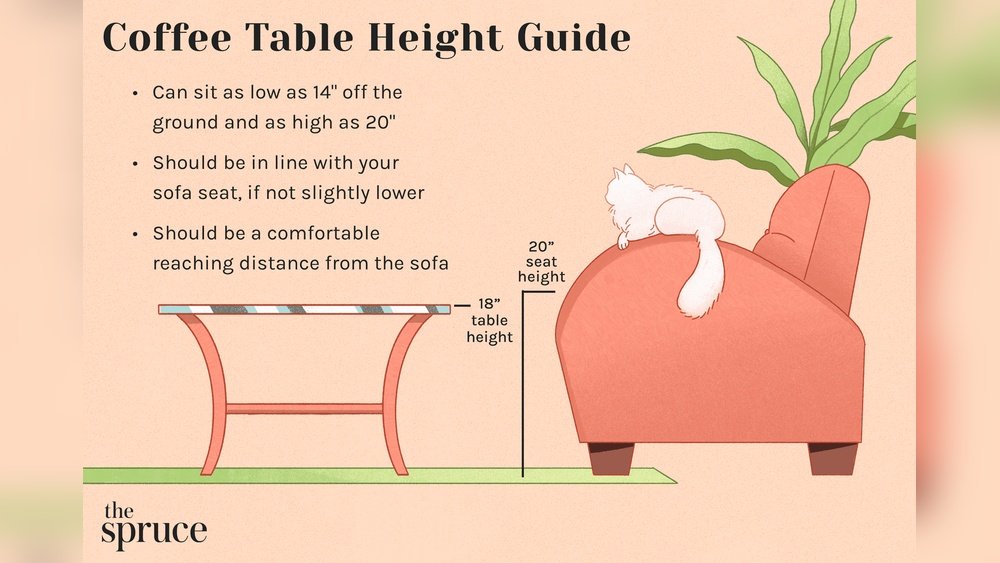
Most coffee tables fall between 16 to 18 inches (40-46 cm) in height. This range works well for the majority of sofas and seating arrangements. However, the right height for your space can vary based on your furniture and how you plan to use the table.
Here is a quick overview of standard heights:
| Coffee Table Type | Typical Height (inches) | Typical Height (cm) |
|---|---|---|
| Standard | 16–18 | 40–46 |
| Modern/Low | 14–16 | 36–41 |
| Traditional | 17–19 | 43–48 |
| Lift-Top | 16–21 (adjustable) | 41–53 |
As you can see, while 16–18 inches is the most common, there are valid reasons to go higher or lower.
The Golden Rule: Match The Sofa Seat Height
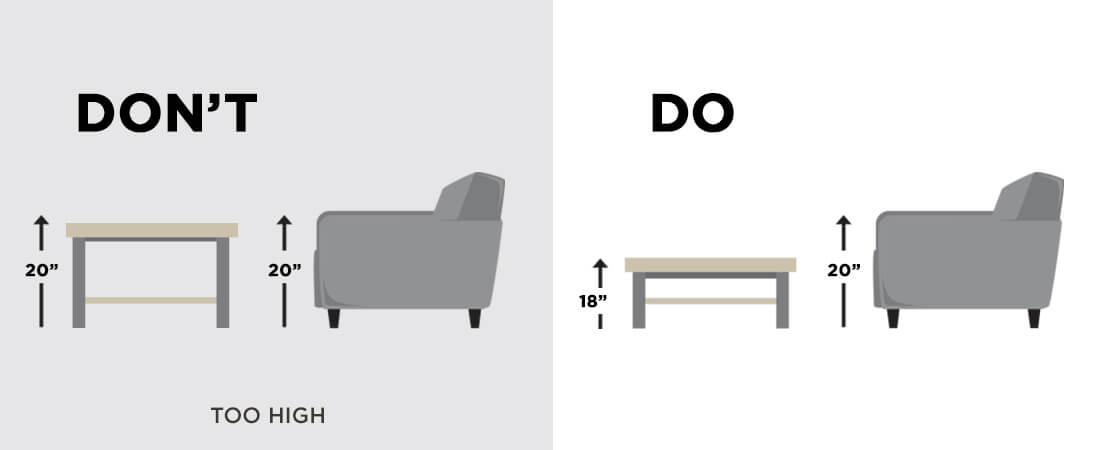
The best rule for coffee table height is simple: The top of your coffee table should be about level with the top of your sofa seat, or 1–2 inches lower. This makes reaching for items easy and keeps everything looking balanced.
How To Measure For The Right Height
- Measure from the floor to the top of your sofa’s seat cushion. Write down this number.
- Choose a coffee table that is the same height or up to 2 inches (about 5 cm) lower. Never go higher than the seat, unless you have a special use (like eating or working).
For example, if your sofa seat is 18 inches (46 cm) high, your coffee table should be between 16–18 inches (41–46 cm).
Special Cases: When To Break The Rule
While the golden rule works for most homes, there are times when you might want a different height:
1. Using The Coffee Table For Meals Or Laptops
If you often use your coffee table for meals, homework, or working from home, you might want a lift-top table or a higher table (around 19–21 inches or 48–53 cm). This reduces bending and makes the table more functional for eating and writing.
2. Extra Low Sofas Or Lounge Furniture
Modern, low-profile sofas are sometimes only 14–15 inches (36–38 cm) high. In this case, choose a table that matches this lower height. A standard 18-inch table would look and feel awkwardly high.
3. Floor Seating Or Japanese-style Rooms
For rooms with floor cushions or tatami mats, a much lower table (10–14 inches or 25–36 cm) fits better and matches the seating style.
4. Sectional Sofas And L-shaped Arrangements
With large sectionals, consider a coffee table that matches the seat height of the main section but still allows easy access from all sides. Sometimes, an oval or round table at the lower end of the standard range works best.
5. Children’s Play Areas
If the coffee table is used by kids, a lower height is safer and more comfortable for their reach (12–15 inches or 30–38 cm).
How Coffee Table Height Affects Room Design
Height isn’t just about comfort—it changes how your room looks and feels.
- Too tall: Makes the space feel cramped, blocks the view of the sofa, and looks unbalanced.
- Too low: Items are hard to reach, and the table can look lost in the space.
A well-matched coffee table height keeps the room feeling open and inviting. It also improves flow, making it easier to walk around and use the space.
Visual Balance
Interior designers talk about “visual balance.” When the table and sofa heights are coordinated, it creates a harmonious line across the room. If the heights are off, the eye is drawn to the imbalance, making the space feel less polished.
The Impact Of Coffee Table Height On Everyday Use
It’s easy to underestimate how much the height of a coffee table affects daily life. Imagine these scenarios:
- You’re relaxing on the sofa and reach for your drink. If the table’s too low, you have to lean or stretch awkwardly.
- Friends come over and set their plates on the table. If it’s too high, it feels like a barrier; too low, and things can spill.
- Kids play games or do crafts. The wrong height means uncomfortable sitting or kneeling.
Practical tip: Test your preferred height by stacking books or boxes to different levels next to your sofa before buying a new table. This helps you feel the difference in real life.
Coffee Table Height For Different Table Shapes
Not all coffee tables are rectangular. Shape can also influence the best height:
| Shape | Ideal Height (inches) | Notes |
|---|---|---|
| Rectangular | 16–18 | Works with most sofas |
| Round/Oval | 15–17 | Best for sectionals or tight spaces |
| Square | 16–18 | Good for large seating areas |
| Nesting Tables | 14–18 | Heights vary for stacking |
Round and oval tables often look better a little lower than rectangular tables, especially in modern or open-plan rooms.
Coffee Table Height Vs. Other Tables
How does coffee table height compare to other tables you might use in your living room? Here’s a handy reference:
| Table Type | Typical Height (inches) | Typical Height (cm) |
|---|---|---|
| Coffee Table | 16–18 | 40–46 |
| Side/End Table | 20–24 | 51–61 |
| Console Table | 28–32 | 71–81 |
| Dining Table | 28–30 | 71–76 |
Coffee tables should sit below your sofa seat, while end tables are usually above seat height—good for reaching from the side.
Factors That Affect Your Coffee Table Height Choice
Choosing the right height isn’t just about following a rule. Consider these factors:
1. Sofa Seat Height
This is the main reference point. Always measure from the floor to the top of the seat cushion. Remember, some sofas sink when you sit, which can make the table feel higher. If your sofa is very soft, choose a table slightly lower.
2. Intended Use
Think about what you actually use your table for. Is it for snacks and drinks, or do you often eat, work, or play games there? If it’s for meals or work, a slightly higher table or a lift-top may be best.
3. Room Size And Layout
A taller table in a small room can make the space feel crowded. In a large room, a table that’s too low can seem lost. Match the table’s scale to your room size.
4. Style And Shape Of Furniture
Modern sofas are often lower than traditional ones. Sectionals or deep seats may need a lower table. The style of your sofa and the height of nearby chairs or recliners also matter.
5. Personal Preference
Some people simply like a lower or higher table for their own comfort. Test different heights to find what feels right for you.
Common Mistakes And How To Avoid Them
Even with good intentions, it’s easy to choose the wrong height. Here are some common mistakes:
1. Ignoring The Sofa Height
Many people buy a coffee table based on looks, not on how it fits with their seating. Always measure your sofa before shopping.
2. Choosing A Table That’s Too High
A tall table can block the view of your sofa and make the room feel less open. Unless you need the extra height for a specific reason, stick to the golden rule.
3. Picking A Table That’s Too Low
A very low table can be stylish, but if it’s hard to reach, it’s not practical. Make sure you can easily set down and pick up items while seated.
4. Not Considering Table Function
If you need storage, a lift-top or shelf underneath can be helpful. But these features can add height—make sure they still fit your needs.
5. Forgetting About Other Seating
If you have chairs or different types of seating around the coffee table, try to balance the height for all areas.
How To Adjust Coffee Table Height If It’s Wrong
Sometimes, you already have a coffee table, but it’s not the right height. Here are practical ways to adjust:
- Add risers or feet: Many hardware stores sell furniture risers or screw-on legs. This can add 1–3 inches (2.5–7.5 cm) of height.
- Use a tray or thick tabletop: If your table is too low, a decorative tray or cutting board can help raise the surface a bit.
- Swap out legs: Some modern tables have removable legs. Search for shorter or longer legs online.
- DIY fix: If you’re handy, you can cut down wooden legs or add a new top to get the perfect height.
Non-obvious tip: If your coffee table has wheels, check if they’re removable. This can lower the table by a few centimeters without much effort.
The Role Of Coffee Table Height In Accessibility
It’s important to consider accessibility, especially if anyone in your home has mobility issues. A coffee table that’s too low or too high can make it hard to move around or use the table comfortably. Ideally, the table should be easy to reach from a seated position and not create a tripping hazard.
Pro tip: Leave at least 18 inches (46 cm) of space between the coffee table and the sofa or chairs. This allows easy movement and prevents bumping knees.
Trends In Coffee Table Height
Design trends come and go, but the standard coffee table height remains quite stable. Recent years have seen:
- Lower, minimalist tables (14–16 inches) in modern, open spaces.
- Lift-top tables for flexible work and dining.
- Mixed heights with nesting tables for more dynamic, multi-use spaces.
While trends can inspire, always prioritize comfort and function over style.
What Materials And Construction Mean For Table Height
Different materials can affect the perceived height of your coffee table:
- Glass tops can make a taller table feel lighter and less bulky.
- Chunky wood or thick legs can make a table feel heavier, so a slightly lower height may look better.
- Metal frames often have thinner profiles, which can suit both low and standard heights.
Insight: A table with a thin top can often sit a bit higher without feeling awkward, while thick tabletops look better lower.

Examples: Choosing The Right Height For Different Living Rooms
Let’s look at a few real-world scenarios.
Modern Loft With Low Sofa
Your sofa seat is 15 inches (38 cm) high. Choose a coffee table 14–15 inches (36–38 cm) high for the best look and comfort. A sleek, low-profile table matches the modern style.
Traditional Living Room With Plush Sofa
Sofa seat is 19 inches (48 cm) high. Pick a table 17–19 inches (43–48 cm) high. A classic wood table with a shelf underneath fits well.
Family Room With Sectional And Kids
Sectional seat height is 17 inches (43 cm). For flexibility, use a set of nesting tables: one at 16 inches, one at 14. Kids can use the lower table for play, adults use the higher one for snacks.
Small Apartment With Multipurpose Needs
Sofa is 16 inches (41 cm) high. A lift-top table that adjusts from 16 to 21 inches (41–53 cm) lets you eat, work, and relax—all in a small space.
Practical Tips For Shopping For The Right Coffee Table Height
- Measure twice: Always measure your sofa seat height before shopping.
- Bring a tape measure: Furniture store displays can be misleading. Measure the table height before buying.
- Consider adjustable tables: If you’re unsure or have changing needs, look for a lift-top or adjustable-height table.
- Check return policies: If you order online, make sure you can return the table if the height isn’t right.
- Visualize at home: Stack boxes or books to your preferred height to see how it feels in your space.
Expert Advice: Designer Insights
Interior designers agree—coffee table height can make or break a living room’s comfort and style. Many recommend erring on the slightly lower side if you’re not sure. A lower table rarely feels out of place, while a tall table can dominate the space.
Non-obvious insight: If your living room has multiple seating types (sofa, chairs, poufs), consider how each person will use the coffee table. Sometimes, a pair of smaller tables at different heights is more practical than one large table.
For more details on coffee table design and sizing, check out this resource from Architectural Digest.
Frequently Asked Questions
What If My Sofa Seat Height Is Not Standard?
If your sofa seat is much higher or lower than average, always match the coffee table to your actual seat height, not the standard. Use the rule: table top should be even with or up to 2 inches below the seat height.
Can I Use An Ottoman Instead Of A Coffee Table?
Yes, ottomans can replace coffee tables, but make sure the height still matches your sofa seat. Ottomans are usually softer and a bit taller, so check comfort and function before deciding.
Are Adjustable Height Coffee Tables A Good Idea?
Adjustable or lift-top tables are great for small spaces and multi-use rooms. They allow you to switch between lounging, eating, and working. Just make sure the minimum height matches your sofa seat.
How Much Space Should I Leave Around My Coffee Table?
Leave at least 18 inches (46 cm) between the coffee table and the sofa or chairs. This allows people to move easily and sit comfortably.
What If I Can’t Find The Perfect Height?
If you love a table that’s the wrong height, consider modifying it (adding risers, changing legs, or adding a thick tray on top). Many small adjustments can make a big difference.
Finding the right coffee table height is about more than just numbers. It’s about creating a comfortable, balanced, and beautiful living room. With a little measuring and attention to detail, you can choose the perfect table for your space—one that feels just right, every day.