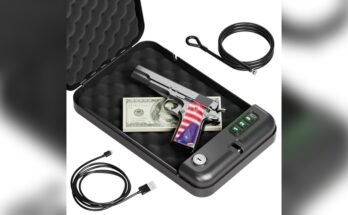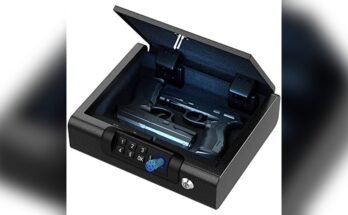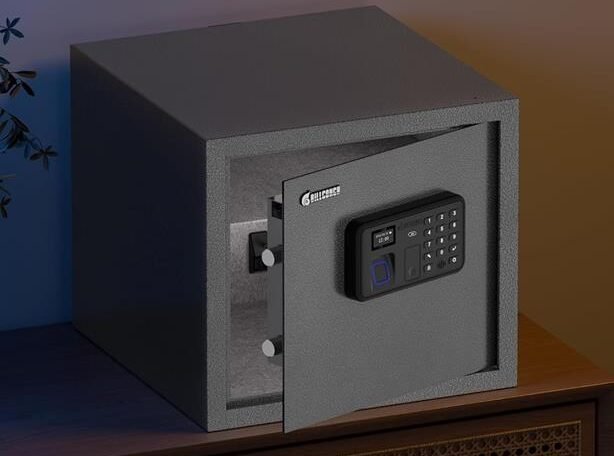
Choosing a gun safe with strong theft protection is one of the most important decisions a firearm owner can make. A good safe does more than just hold guns — it deters break‑ins, resists forced entry, and keeps firearms out of the wrong hands.
Whether you’re protecting a single defensive firearm or an entire collection, the right safe minimizes theft risk and gives you confidence that your gear is secure.
Below is a step‑by‑step guide to help you choose a gun safe optimized for theft resistance.
Why Theft Protection Matters
Firearms are valuable, and safes are often targeted in home burglaries because:
- Safes can be easier to pry open without strong construction
- Smaller safes can be carried off if not anchored
- Weak or cheap locks are easy to defeat
- Improper placement makes safes vulnerable
A safe designed for theft protection reduces these risks by combining strong materials, secure locks, heavy construction, and smart placement options.
1. Start With Heavy, Strong Construction
The foundation of theft resistance is the safe’s build quality.
Steel Thickness
Choose safes with:
- 12 gauge steel or thicker
- Solid, reinforced doors
- Heavy panels that resist prying
Thicker steel slows down or stops brute‑force attacks and makes it harder to bend or cut with tools.
Welded Body
A body that is welded — instead of riveted — is stronger and less susceptible to separation when pried on.
Multi‑Bolt Locking
Look for safes with multiple solid steel locking bolts around the door. These bolts help the door resist being forced open, even with leverage tools.
2. Choose a Lock That Resists Tampering

The lock is the protector of your safe’s contents — so choose one that can’t be easily bypassed.
Lock Options for Theft Protection
Mechanical Dial Lock
✔ Very reliable
✔ Hard to bypass quickly
✔ No electronics to fail
Digital Electronic Keypad
✔ Fast access
✔ Codes can be changed easily
✔ Must be quality‑built
Biometric (Fingerprint) Lock
✔ Quick access
✔ Avoid cheap units — they can fail
✔ Best with backup access
Key Backup
- Always choose safes with a secondary mechanical backup — theft attempts often try to force electronic locks.
Pro Tip: Avoid cheap or flimsy lock mechanisms — criminal tools and time can defeat weak locks quickly.
3. Fire and Impact Resistance Helps Security Too
Safes with solid fire‑resistant insulation and impact‑resistant construction often have additional internal reinforcement, which also enhances theft protection.
Fireboard insulation and fortified door seals help resist cutting tools and forceful entry as well as heat — making it harder for a thief to breach the safe quickly.
While fire resistance is a separate feature, high‑end safes often combine both fire and theft resistance.
4. Weight & Anchoring: Two Keys to Prevent Theft
A heavy safe is harder to steal.
If a burglar can pick up your safe and walk away, it doesn’t matter how strong the door is — the content is gone.
Ideal Theft‑Proof Setup
✔ A heavy safe (250+ pounds for small/medium; 500+ for large)
✔ Permanently anchored to concrete or wood framing
✔ Mounting bolts included and properly installed
Anchoring keeps even smaller safes from being carried off or shoved into a vehicle.
5. Interior Door Bars & Reinforcements
Some high‑security safes include internal door security bars that lock the inner door plate independently of the outer lock.
These bars make it far more difficult for pry tools to collapse the door even if the outer frame is compromised.
6. Electronic Alarm and Smart Monitoring (Optional but Effective)
Many modern safes offer:
- Internal alarms triggered by tampering
- External connections to home alarm systems
- Smartphone monitoring
- GPS tracking modules (added theft recovery feature)
These don’t replace mechanical strength, but they add layers of theft deterrence and alert you instantly if someone tries to breach the safe.
7. Placement Matters for Theft Protection
Where you install the safe significantly affects how vulnerable it is.
Best Placement Options
✔ Anchored along interior walls
✔ In closets with solid framing
✔ Behind furniture or built‑in cabinetry
Poor Placement
✘ Next to exterior doors or windows
✘ Garage corners easily visible from outside
✘ Near tools that can pry or break the safe
Hiding the safe makes it less likely a burglar will find or target it in the first place.
8. Concealment and Camouflage Adds Security
A safe that’s hard to locate is a safe that’s less likely to be targeted.
Good concealment strategies include:
- Building it into a closet wall
- Concealing behind false panels
- Integrating into custom cabinetry
- Positioning behind ordinary furniture
Concealment doesn’t replace strong construction, but it reduces discovery risk.
9. Maintain Separation of Firearms and Ammunition
For both safety and theft control:
✔ Store firearms unloaded
✔ Keep ammunition in a separate locked container
✔ Use interior trays or racks for organization
Separating firearm and ammo storage makes it harder for a thief to get a functional weapon even if they breach the safe — and it reinforces responsible ownership.
10. Budget Wisely (Security Over Gimmicks)
It’s tempting to cut costs, but when it comes to theft protection:
Security first, basics second, luxury last.
Prioritize:
- Strong materials and construction
- A reputable lock system
- Weight and anchoring capability
- Protective features (fire & humidity resistance)
Only then consider extras like internal lighting, compartmentalized drawers, and electronic notification systems.
Quick Checklist for Theft Protection
Before you buy, make sure your safe offers:
✅ Thick, reinforced steel construction
✅ Reliable locking mechanism (not cheap or flimsy)
✅ Multi‑bolt door system
✅ Anchoring capability
✅ Concealment options or placement flexibility
✅ Heavy weight or bolting option
✅ Backup lock access
✅ Optional alarm or tamper detection
A safe that checks all of these boxes puts you ahead of most break‑in attempts.
Final Thoughts
Choosing a gun safe for theft protection is about building layers of defense:
- Physical strength
- Secure locks
- Anchoring
- Smart placement
- Discretion
No safe is absolutely invincible, but a thoughtfully chosen, well‑installed safe drastically reduces the chances of unauthorized access and theft.
Strong construction, smart planning, and responsible storage keep your firearms secure, protected, and out of the wrong hands — giving you confidence and peace of mind.