Whether you’re a full‑time RVer, a weekend adventurer, or enjoy outdoor trips with your camper, securing firearms while on the road is an important safety step. RVs and campers present unique challenges compared to homes: limited space, constant movement, and increased risk of break‑ins when parked or traveling.
This guide will walk you through exactly how to choose a gun safe that fits your RV lifestyle — focusing on size, security, mounting options, weather protection, and responsible storage.
1. Understand the RV Environment
Before choosing a gun safe, know what you’re dealing with:
Unique RV Challenges
✔ Limited space and storage
✔ Constant vibrations and movement
✔ Quick access needed in some cases
✔ Higher theft risk when parked in RV parks, campgrounds, or roadside stops
✔ Temperature fluctuations and humidity changes
An RV gun safe must be compact, secure, and capable of withstanding motion and variable conditions.
2. Start With the Right Size
Space constraints are the biggest consideration in an RV or camper.
Before buying, measure the exact space you plan to use — including:
📏 width
📏 height
📏 depth
📏 clearance for doors and hinges
Leave room for easy access and any accessories (like holsters or extra magazines). A safe that barely fits becomes frustrating to use.
Common RV Safe Sizes
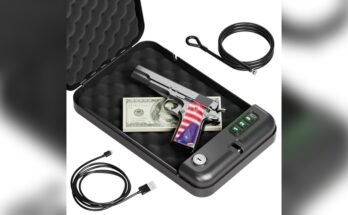
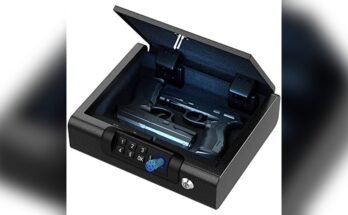
- Under‑seat or bench safes: compact, hidden
- Drawer safes: slide into existing drawers
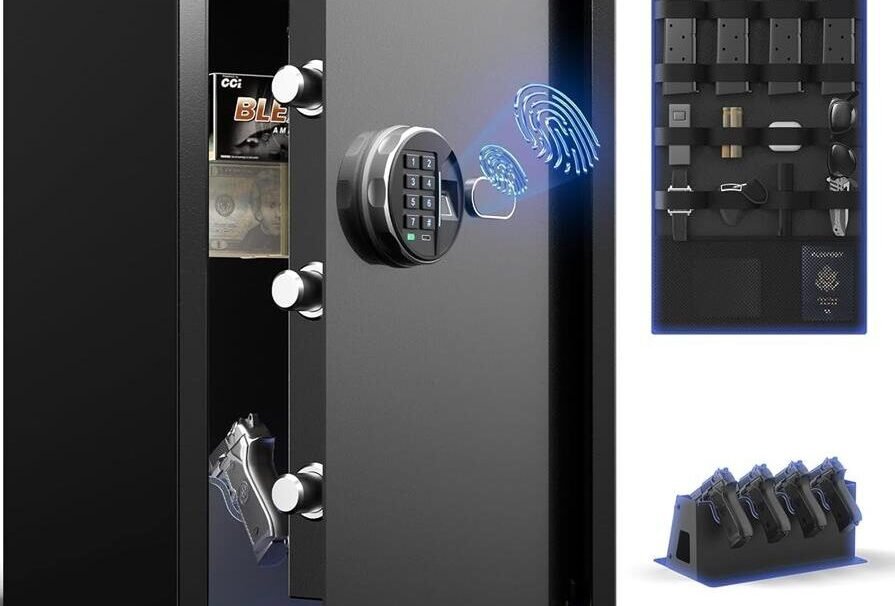
- Small vertical safes: narrow storage columns
- Wall‑mounted safes: bolt to interior walls
Choose the size that makes sense for your RV layout — but don’t go so small that firearms or accessories are forced in and damaged.
3. Prioritize Strong Security
Space limitations don’t mean you can sacrifice protection.
Look for:
🔒 Solid Steel Construction
- Thick walls and doors
- Multi‑bolt locking systems
- Internal deadbolts if possible
This protects against theft — both from strangers and from curious hands on trips.
🔐 Reliable Locks
For RV use, quick — but secure — access is ideal. Lock options include:
- Biometric (Fingerprint)
- Digital keypad
- Mechanical dial with backup key
Biometrics offer the fastest access, but always choose a model with a backup entry method (key or code) in case electronics fail.
4. Focus on Mounting and Movement Stability
An RV or camper moves — so your safe must stay put.
Anchoring Options
✔ Directly bolt to floor studs or reinforced subfloor
✔ Use mounting brackets designed for RV use
✔ Consider recessed or hidden mounting locations
✔ Wall mounting if floor space is limited
An anchored safe prevents theft and stops the safe from sliding or tipping while driving.
Also think about vibration resistance — choose safes with internal padding so firearms don’t get scratched or damaged during travel.
5. Quick Access vs. Concealed Storage
RV life demands flexibility.
Quick Access
Sometimes you want your firearm easily reachable — especially for defensive purposes in remote areas.
Good access features:
✔ Fast biometric unlock
✔ Quiet keypad
✔ Smooth door action
Concealed and Secure
In campgrounds or populated stops, you may prefer your safe to be hidden or integrated into cabinetry.
Camouflage options include:
- Under seat installation
- Behind removable panels
- Inside furniture compartments
Balance access with discretion based on how and where you use your RV.
6. Moisture and Climate Control
RVs often face humidity, condensation, and temperature swings — especially if you travel seasonally or park near water.
To protect firearms:
- Include desiccant packs or electric dehumidifier rods
- Use a hygrometer to monitor internal humidity
- Avoid placing the safe in areas that get wet (near water heaters, sinks, AC drips)
While moisture is a bigger concern than fire in RVs, protecting against rust and corrosion is essential for long‑term firearm care.
7. Fire Protection Considerations
RVs have fire risks too — from cooking, electrical systems, or propane leaks.
Smaller safes often do not have high fire ratings, but choose models with some level of fire protection if possible — or plan to keep especially valuable gear in a fire‑resistant container inside the main safe.
Always follow proper RV safety protocols to minimize fire risk in the first place.
8. Evaluate Lock Power and Backup Access
Since RVs often operate on battery power or limited electrical supply:
✔ Choose safes with low‑power electronic locks
✔ Favor models with a backup mechanical key or dial
✔ Check battery life and replace proactively
Losing access in a remote camping area because of a dead battery is easily avoidable with the right planning.
9. Child Safety and Responsible Storage
If children travel with you:
- Always lock firearms unloaded
- Keep ammunition separate
- Choose locks and positioning that children can’t reach
- Teach kids not to touch the safe
Responsible storage protects everyone, no matter where you travel.
10. Budget and Value Priorities
RV gun safes vary from affordable to premium. Consider:
Priority 1 — Security
✔ Steel strength
✔ Reliable locks
✔ Anchoring system
Priority 2 — Convenience
✔ Quick access
✔ Compact design
✔ Backups
Priority 3 — Protection
✔ Moisture control
✔ Fire resistance (when feasible)
Avoid cheap or flimsy boxes — they offer little real protection, especially on the road.
Final Checklist
Before your final purchase, make sure the gun safe you choose:
✅ Fits your RV’s space and layout
✅ Has strong construction and reliable locking
✅ Can be anchored securely
✅ Offers appropriate access speed
✅ Includes backup entry methods
✅ Addresses moisture and movement concerns
✅ Matches your budget priorities
Conclusion
Choosing a gun safe for an RV or camper is about balancing space, security, access, and protection. The right safe fits your limited space, anchors solidly, gives you quick access when needed, and guards your firearms against theft, movement damage, and environmental wear.
With thoughtful selection and proper installation, your RV gun safe can give you both security and peace of mind wherever your travels take you.