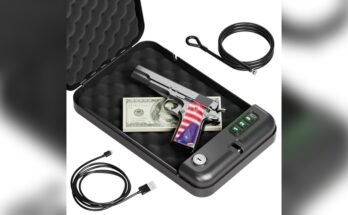
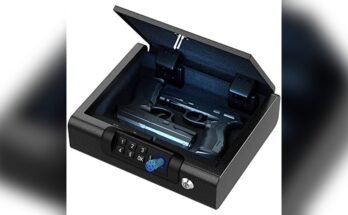
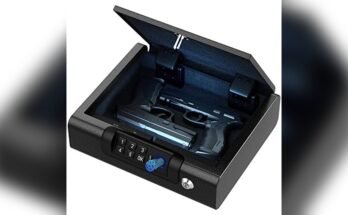
A nightstand gun safe is a compact, quick‑access storage solution designed for bedrooms. Unlike large floor safes, nightstand safes are meant to provide secure, responsible storage while keeping defensive firearms within easy reach if needed during an emergency.
Choosing the right nightstand safe isn’t just about size — it’s about speed, reliability, safety, and fit for your lifestyle. This guide walks you through every important factor so you can select the best safe with confidence.
Why a Nightstand Gun Safe Is Different
Nightstand use comes with unique priorities:
✔ Fast access — gets you to your firearm quickly if needed
✔ Low profile — fits on or beside a nightstand without crowding
✔ Quiet operation — opens smoothly without loud rattles
✔ Secure storage — prevents unauthorized access, especially by children
Balancing speed and safety is the key.
1. Pick the Right Size
Nightstand safes should be compact, but still roomy enough for your firearm.
Measure:
- Your firearm with holster attached
- The space on or inside the nightstand
- Room for small accessories (extra magazine, small flashlight)
A safe that’s too small won’t fit your firearm with a holster, and one that’s too large might be awkward or visible.
Tip: Always test the dimensions — list width, height, and depth — before buying.
2. Choose the Best Locking Mechanism
For nightstand safes, the lock affects speed and reliability more than anything else — especially in low‑light or high‑stress situations.
🔑 Common Lock Types
Biometric (Fingerprint)
- Fastest access
- No codes to remember
- Works well in darkness
Best for: People prioritizing speed
Digital Keypad
- Reliable and quick
- Easy code reset
- Some models beep or light up
Best for: Users who want convenience + security
Backup Keys
- Important feature in any safe
- Ensures access if electronics fail
Mechanical Dial
- Very reliable
- Slower access — usually not ideal for nightstand use
Pro Tip: Choose a biometric safe with a backup keypad or key — never rely on a single access method.
3. Opening Speed and Quiet Operation
A nightstand safe should open quickly and quietly.
Look for safes with:
- Responsive fingerprint readers
- Smooth, quiet hinges
- Non‑clunky keypads
- Low noise alerts or silent mode
Avoid safes that require long button holds or repeated presses — speed matters in emergencies.
4. Security and Safety Features
Security shouldn’t be sacrificed for speed.
Here’s what to look for in a nightstand safe:
🔒 Solid Build
- Steel construction (not flimsy sheet metal)
- A secure locking bolt system
🔐 Anti‑Access Protection
- Lockout mode after failed attempts
- Tamper alarms (optional but useful)
- Concealed hinges to prevent prying
These minimize the risk of unauthorized access while still allowing quick entry for you.
5. Power and Backup
Electronic nightstand safes run on batteries — and those batteries must be reliable.
- Use standard AA or AAA batteries — easy to replace
- Check battery life ratings (longer is better)
- Choose safes with low‑battery alerts
- Always have backup mechanical entry (key or dial)
Never let battery dies lock you out in a critical moment.
6. Placement and Accessibility
Where you position the safe affects usability.
Best options:
✔ On top of the nightstand
✔ Inside a drawer (with easy reach)
✔ Within arm’s reach from the bed
Avoid:
✘ Under heavy objects
✘ Far inside a deep cupboard
✘ Hidden behind clutter
The goal is easy access without danger of accidental discovery.
7. Interior Organization
Even though nightstand safes are small, smart interior design matters.
Good interior features:
✔ Padded lining (protects firearm finishes)
✔ Interior LED lighting
✔ Adjustable racks or foam
✔ Easy‑to‑see layout
These help you grab the firearm quickly, without fumbling.
8. Concealment and Aesthetics
A nightstand safe often sits in plain view — look for designs that:
- Blend with furniture
- Don’t draw attention
- Don’t look “safe‑like”
Some people prefer sleeker finishes or disguising the safe inside a drawer.
Remember: good concealment adds safety.
9. Child Safety and Unauthorized Access
Even if children aren’t in your home now, responsible storage means planning ahead.
Features that boost safety:
✔ Biometric security (prevents random access)
✔ Lockout after repeated failed tries
✔ Strong materials that resist prying
Keeping the safe locked and requiring deliberate access reduces accidental handling.
10. Price and Warranty Considerations
Nightstand safes range from budget to premium. Here’s how to think about price:
- Security first – don’t sacrifice steel thickness or lock quality
- Convenience second – fast access and quiet operation
- Extras third – lighting, alarms, aesthetics
Always choose a reputable brand with a good warranty — even small safes can fail if build quality is weak.
11. Maintenance and Testing
Once installed:
✔ Test every access method regularly
✔ Replace batteries before they die
✔ Keep the interior dry and dust‑free
✔ Check that the safe stays securely anchored
It’s easier to maintain a nightstand safe than to regret ignoring signs of failure later.
12. Legal and Safety Best Practices
A nightstand gun safe is all about responsible ownership.
Always:
✔ Store firearms unloaded
✔ Keep ammunition separate (if appropriate)
✔ Teach trusted adults about safe access
✔ Never leave the safe open unattended
Responsibility and safety always come before convenience.
Final Checklist
Before you buy, make sure your nightstand safe:
✅ Fits your firearm (with accessories or holster if needed)
✅ Has fast, reliable access (biometric or keypad)
✅ Includes backup entry options
✅ Offers solid build and security features
✅ Is easy to reach from your bed
✅ Has good battery and maintenance plan
Conclusion
Choosing a gun safe for nightstand use is about finding the perfect balance between quick, reliable access and solid security. The right safe protects your firearm from unauthorized hands while keeping it within reach when you need it most.
A well‑chosen nightstand safe is an investment in both safety and peace of mind.