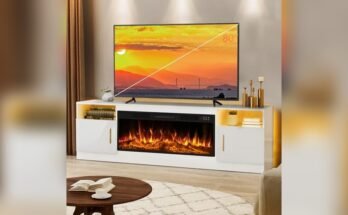
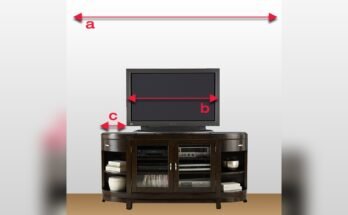
When you think about a buffet cabinet, what comes to mind? Maybe you imagine a sleek wooden sideboard in a dining room, holding plates and glasses for a family meal. Or perhaps you picture a modern piece with glass doors, displaying beautiful dishes and serving platters.
Buffet cabinets, sometimes called sideboards or credenzas, are not just storage furniture—they are also a design statement. But have you ever wondered what materials these cabinets are made from, and why it matters?
Choosing the right material for a buffet cabinet affects not just its appearance, but also its durability, price, maintenance, and even its environmental impact. With so many options available, from solid wood to metal and glass, it’s easy to feel overwhelmed.
Understanding the strengths and weaknesses of each material will help you pick a cabinet that fits both your style and your needs.
Let’s explore the main materials used in buffet cabinets, how they differ, and which might be the best for your home.
Solid Wood Buffet Cabinets
Solid wood is often seen as the classic material for buffet cabinets. It is valued for its strength, beauty, and long life. Common types of solid wood used in buffet cabinets include oak, walnut, maple, cherry, mahogany, and pine.
A buffet cabinet made from solid wood feels heavy and sturdy. The unique grain patterns and natural color changes make every piece different. Some woods, like oak and maple, have a light color and strong grain, while walnut and mahogany offer a darker, richer look.
Solid wood cabinets can last for decades, sometimes even generations, if they are well cared for.
However, solid wood is sensitive to changes in temperature and humidity. It can expand, shrink, or even crack if the environment changes quickly. This means you should avoid placing a solid wood buffet cabinet next to radiators or in direct sunlight.
Solid wood cabinets are usually more expensive than those made from engineered wood, but many buyers see them as an investment. They are easy to repair: scratches and dents can be sanded out, and the surface can be refinished to look like new.
Non-obvious insight: Not all “solid wood” buffet cabinets are 100% solid wood. Some may use solid wood for visible parts and cheaper materials for hidden panels or backs. Always check product descriptions or ask sellers for details.
Common woods for buffet cabinets:
- Oak: Known for strength and visible grain.
- Walnut: Rich, dark color; often used for luxury pieces.
- Maple: Hard, smooth, and light colored.
- Cherry: Reddish tone that gets richer with age.
- Mahogany: Deep, reddish-brown; resists swelling and shrinking.
- Pine: Softer and lighter; often used for rustic designs.
Engineered Wood Buffet Cabinets
Engineered wood is a broad category that includes plywood, MDF (medium-density fiberboard), and particle board. These materials are made by combining wood fibers or particles with glue and pressing them into sheets.
Buffet cabinets made from engineered wood are usually less expensive than solid wood. They are also more resistant to warping and shrinking because they don’t react as much to humidity. Many buffet cabinets use engineered wood for shelves, drawer bottoms, or interior parts, even if the outside is solid wood.
Plywood
Plywood is made by gluing thin layers of wood together, with the grain of each layer running in a different direction. This makes plywood very strong and stable. It’s often used for cabinet sides, shelves, and backs.
Non-obvious insight: High-quality plywood can sometimes outperform solid wood in terms of stability and strength, especially for large, flat surfaces.
Mdf (medium-density Fiberboard)
MDF is made from very fine wood fibers mixed with resin and pressed into boards. It has a smooth surface, making it easy to paint or cover with a wood veneer. MDF is heavier than particle board and less likely to chip.
However, MDF is not as strong as plywood or solid wood, and it can swell if it gets wet. It’s a popular choice for painted buffet cabinets or those with a modern, seamless look.
Particle Board
Particle board uses larger wood particles and is less dense than MDF. It is the least expensive option, but it is also the weakest. It can be covered with a wood veneer or laminate to improve its appearance.
Buffet cabinets made mainly from particle board are usually very affordable, but they may not last as long as those made from plywood or solid wood.
Wood Veneer Buffet Cabinets
A wood veneer is a thin layer of real wood glued onto a base of engineered wood, usually MDF or particle board. This combines the beauty of natural wood with the stability and lower cost of engineered wood.
Wood veneer buffet cabinets can look almost identical to solid wood, but they are lighter and often less expensive. The veneer can be stained or finished in many ways, just like solid wood. However, the thin veneer layer can be damaged by deep scratches or heavy wear.
It’s not possible to sand and refinish veneer as many times as solid wood.
Non-obvious insight: Some high-end buffet cabinets use thick, high-quality veneer that can be refinished once or twice, while cheaper cabinets use very thin veneer that can’t be repaired at all.
Laminate Buffet Cabinets
Laminate is a synthetic material made by layering paper or fabric with resin and then applying it to a base (usually MDF or particle board). The outer layer can be printed to look like wood, stone, or any other pattern.
Laminate buffet cabinets are very durable and easy to clean. They resist stains, scratches, and moisture better than real wood or veneer. This makes them a good choice for busy homes or spaces where spills are likely.
However, laminate does not have the warmth or unique look of real wood. It can chip or peel if damaged, and it’s almost impossible to repair. Laminate is often used for modern or budget-friendly buffet cabinets.
Metal Buffet Cabinets
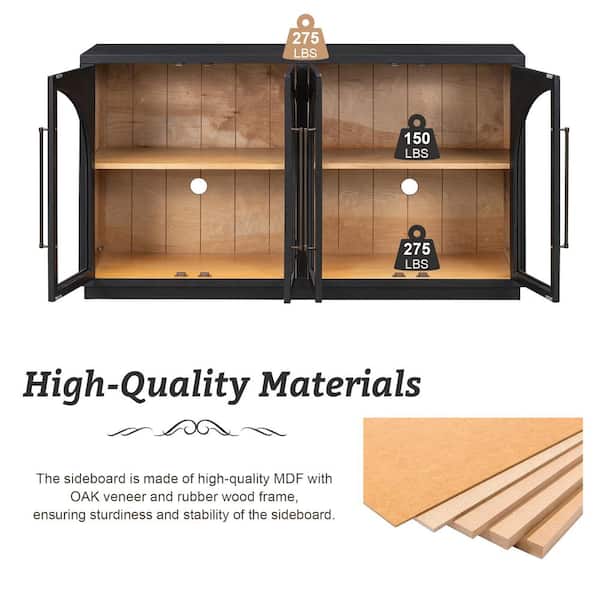
Metal is not as common as wood, but it is sometimes used to create unique, industrial, or modern buffet cabinets. The most common metals are steel, aluminum, and iron.
Metal buffet cabinets are very strong and usually more resistant to moisture and insects than wood. They are easy to clean and can be finished with paint or powder coating for extra protection. Some metal cabinets have glass or wood accents to soften their look.
On the downside, metal can dent or scratch, and it may feel cold or less inviting than wood. Metal buffet cabinets are often seen in lofts, offices, or modern dining rooms.
Non-obvious insight: Powder-coated steel is more resistant to rust and scratches than painted steel. If you live in a humid area or want a buffet cabinet for a basement, powder coating adds extra protection.
Glass Buffet Cabinets
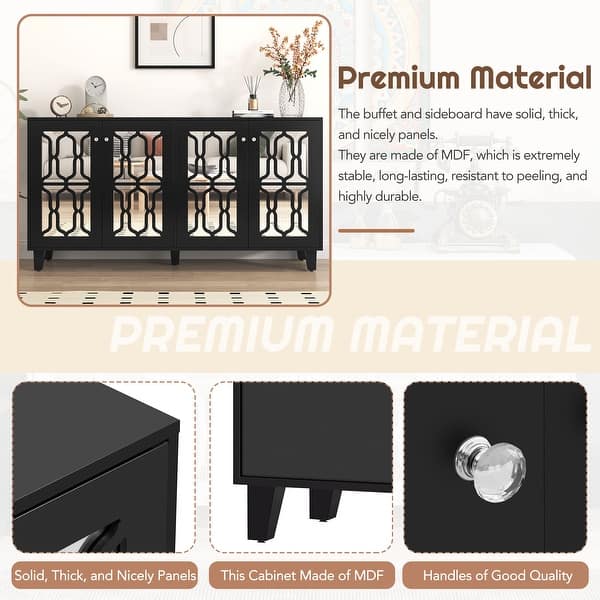
Glass is often used in combination with other materials—mainly wood or metal—to create glass-fronted buffet cabinets. Full glass cabinets are rare because they are heavy and fragile.
Glass doors allow you to display dishes, glassware, or collectibles while keeping dust away. There are many types of glass, such as clear, frosted, etched, or stained, each giving a different look.
Tempered glass is much stronger and safer than regular glass. If it breaks, it shatters into small, dull pieces instead of sharp shards. If you have children or pets, always check that buffet cabinets with glass use tempered glass.
Stone And Marble Buffet Cabinets
Some luxury buffet cabinets use real or imitation stone or marble for the top surface. This adds a touch of elegance and makes the surface very durable. Stone tops resist heat, scratches, and stains better than wood, making them ideal for serving hot or messy foods.
However, real stone and marble are very heavy and expensive. They also need special cleaning products to avoid stains and damage. Imitation stone—such as engineered quartz or ceramic—offers a similar look at a lower price and with less maintenance.
Non-obvious insight: Cabinets with stone or marble tops often have reinforced frames or extra supports. Always check the construction before placing heavy items on top.
Rattan And Wicker Buffet Cabinets
For a more natural or tropical look, some buffet cabinets feature rattan or wicker panels. Rattan is a plant fiber woven into patterns. These materials are lightweight and add texture to a room.
While rattan and wicker look beautiful, they are not as strong as wood or metal. They can break or unravel if handled roughly. These cabinets work best in casual dining rooms or sunrooms.
Tip: Look for buffet cabinets that use rattan or wicker only for decorative panels—not the whole structure—for better strength.

Plastic And Acrylic Buffet Cabinets
Plastic and acrylic are less common but are sometimes used for modern or casual buffet cabinets. Acrylic, in particular, is a clear material that mimics glass but is much lighter and less likely to break.
Plastic cabinets are easy to clean, waterproof, and budget-friendly. However, they often lack the strength and style of other materials. Acrylic can scratch easily but offers a fun, futuristic look.
Bamboo Buffet Cabinets
Bamboo is a fast-growing, sustainable material. It is technically a grass, but it is harder than many woods. Bamboo buffet cabinets are strong, lightweight, and have a modern look with a unique grain.
Bamboo is more eco-friendly than most woods and can be a smart choice if you care about sustainability. However, the quality of bamboo furniture varies widely. High-quality bamboo cabinets are usually made from “solid bamboo panels” pressed together with strong adhesives.
Non-obvious insight: Cheap bamboo buffet cabinets sometimes use thin bamboo strips over particle board, which are less durable.
Mixed Material Buffet Cabinets
Many modern buffet cabinets combine two or more materials to get the best qualities of each. For example, you might see a cabinet with a wood frame, glass doors, and a stone top. Or a metal frame with wood shelves.
Mixing materials allows for more creative designs and balances cost, strength, and appearance. However, you should always check how well the materials are joined together. Poor construction can lead to problems at the seams between different materials.
Tip: Mixed material cabinets often offer the best value if you want both style and durability.
Environmental Impact Of Buffet Cabinet Materials
When choosing a buffet cabinet, it’s wise to think about how the material affects the environment. Solid wood from sustainable forests is renewable, but cutting down old-growth forests can harm ecosystems. Engineered wood products often use wood waste and are more eco-friendly, but the glues sometimes contain chemicals like formaldehyde.
Bamboo and reclaimed wood are top choices for green homes. Metal and glass are recyclable, but making them uses a lot of energy. Plastics are cheap but create more waste.
Certification to look for: The Forest Stewardship Council (FSC) certifies wood that comes from responsibly managed forests.
How Material Affects Durability And Maintenance
Not all buffet cabinets are created equal. The material you choose will decide how long your cabinet lasts and how much work it takes to keep it looking good.
- Solid wood: Lasts for generations if cared for, but sensitive to moisture and sunlight.
- Engineered wood: More stable, but less strong; needs gentle cleaning.
- Laminate: Easy to clean, highly resistant to stains and scratches.
- Metal: Tough, but can dent or rust if unprotected.
- Glass: Easy to wipe down, but can break if hit.
- Stone/marble: Durable, but needs sealing and special cleaners.
- Rattan/wicker: Needs gentle handling and dusting.
- Plastic/acrylic: Easy to clean, but scratches easily.
Let’s compare some of the main materials:
| Material | Durability | Maintenance | Cost |
|---|---|---|---|
| Solid Wood | High | Medium | High |
| Plywood | High | Low | Medium |
| MDF | Medium | Low | Low |
| Laminate | Medium | Very Low | Low |
| Metal | High | Low | Medium |
| Glass | Medium | Low | Medium |
Visual Appeal: How Material Changes The Look
Different materials give buffet cabinets different styles. Here’s how some of the top materials shape the final look:
- Solid wood: Warm, classic, and elegant. Fits traditional, rustic, or farmhouse interiors.
- Veneer: Sleek and consistent. Good for modern or mid-century styles.
- Laminate: Can mimic any look—wood, stone, or bold colors. Popular for contemporary spaces.
- Metal: Industrial or minimalist. Pairs well with modern décor.
- Glass: Light and airy. Makes small spaces look bigger.
- Stone/marble: Luxurious and formal. Suits upscale dining rooms.
- Rattan/wicker: Casual and relaxed. Perfect for coastal or bohemian settings.
- Bamboo: Clean and natural. Great for eco-friendly, modern homes.
Here’s a quick style comparison:
| Material | Best For | Common Finishes |
|---|---|---|
| Solid Wood | Traditional, Rustic | Natural, Stained |
| Veneer | Modern, Mid-century | Matte, Glossy |
| Laminate | Contemporary, Budget | Printed, High-Gloss |
| Metal | Industrial, Minimalist | Painted, Powder-Coated |
| Glass | Display, Small Spaces | Clear, Frosted |
| Stone/Marble | Luxury, Formal | Polished, Matte |
| Bamboo | Eco-Friendly, Modern | Natural, Caramelized |
Price Range: How Material Impacts Cost
Material choice is one of the biggest factors in the price of a buffet cabinet. Here’s a rough breakdown:
- Solid wood: $$$ – The most expensive, but the best for long-term value.
- Plywood/veneer: $$ – Mid-range, offers a good balance of quality and cost.
- Laminate, MDF, particle board: $ – Budget-friendly, but less durable.
- Metal and glass: $$ – Can range from affordable to luxury.
- Stone/marble: $$$ – Usually the most expensive.
- Rattan, bamboo: $$ – Price varies by quality and design.
Tip: Never judge a buffet cabinet by price alone. Check the construction, joinery, and finish before buying.
What To Consider When Choosing Buffet Cabinet Materials
Before buying a buffet cabinet, ask yourself:
- How will you use it? For heavy use, choose solid wood, plywood, or metal. For light storage or display, veneer or laminate may be enough.
- What’s your style? Match the material to your décor.
- What’s your budget? Decide how much you can spend before shopping.
- Do you need easy care? Laminate and metal are the easiest to maintain.
- Are you eco-conscious? Look for bamboo, recycled materials, or FSC-certified wood.
- Do you have allergies? Avoid materials with strong odors or chemical glues.
Non-obvious insight: Touch and feel matter. Always try to visit a showroom to see how the material feels in person, if possible.
Frequently Asked Questions
What Is The Best Material For A Buffet Cabinet?
There is no single “best” material—it depends on your needs. Solid wood is the most durable and classic, while laminate is affordable and easy to clean. Plywood with veneer offers a good balance of quality and price. If you want a modern look, metal or glass could be right.
Are Buffet Cabinets Made From Mdf Strong Enough?
Buffet cabinets made from MDF are strong enough for light to moderate use, especially if they use MDF for shelves or sides and have a sturdy frame. However, MDF is not as strong as plywood or solid wood, and it can be damaged by water. For heavy items or daily use, consider a cabinet with a stronger core.
Is Veneer Real Wood?
Yes, veneer is a thin slice of real wood glued to a stronger, usually less expensive base. It gives the look of solid wood at a lower cost. However, it’s not as durable as a full solid wood cabinet.
Are Metal Buffet Cabinets Better Than Wood?
Metal buffet cabinets are stronger against moisture, insects, and fire, but they can dent or scratch. They also offer a more modern look. Wood is warmer and more traditional, but needs more care. The “better” choice depends on your style and needs.
How Can I Tell If A Buffet Cabinet Is Made From Quality Materials?
Check for:
- Solid, heavy feel (not hollow or flimsy)
- Smooth, even finish with no peeling or bubbling
- Strong joinery (dovetail or mortise-and-tenon joints)
- Tempered glass if glass is used
- Certifications like FSC for eco-friendly wood
For more details about furniture materials, you can visit the Wikipedia entry on wood furniture.
Buffet cabinets come in many materials, each with their own benefits and challenges. By understanding your needs and the qualities of each material, you can choose a cabinet that’s both beautiful and practical for years to come.