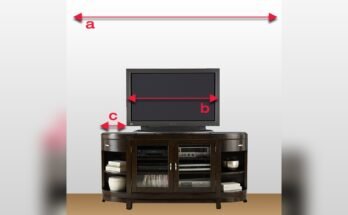
Choosing the right size buffet cabinet can completely change how your dining room or living space looks and functions. Many people buy a buffet cabinet only to realize later that it’s either too big, blocking walkways, or too small, leaving them with not enough storage.
The perfect buffet cabinet should balance style, storage, and space—without making your room feel crowded.
Understanding how to choose the right size isn’t just about measuring the wall. You need to think about what you plan to store, how you’ll use the cabinet, and how it fits with your table and chairs. Some homeowners want to display beautiful dinnerware.
Others need a place to hide away kids’ art supplies or extra electronics. The right size will depend on your goals and the room’s layout.
Let’s explore everything you need to know about selecting the perfect buffet cabinet size. By the end, you’ll know what measurements to take, what mistakes to avoid, and what features matter most for your needs.
What Is A Buffet Cabinet?
A buffet cabinet is a long, low storage unit often placed in a dining room or living area. It typically stands on legs and has a combination of drawers, cabinets, and shelves. The top surface is ideal for serving food, displaying décor, or holding drinks during parties.
Buffet cabinets are sometimes called sideboards or credenzas, but there are small differences:
- Sideboards usually have shorter legs and sometimes extend to the floor.
- Credenzas tend to have sliding doors and are often more modern in style.
However, the size principles apply to all these furniture types.
Why Buffet Cabinet Size Matters
Picking the right size isn’t just about looks. Here are key reasons why size is important:
- Functionality: The cabinet must hold everything you want to store, from tableware to table linens.
- Traffic flow: Too large, and it will block walking paths. Too small, and it won’t be useful.
- Room proportion: The cabinet should fit naturally with the room size and other furniture.
- Visual balance: A buffet cabinet that’s too tall or short can throw off the look of your space.
Standard Buffet Cabinet Sizes
Buffet cabinets come in many shapes and sizes, but there are common measurements to use as a starting point.
| Size Category | Typical Length (inches) | Typical Height (inches) | Typical Depth (inches) |
|---|---|---|---|
| Small | 36–48 | 30–34 | 14–16 |
| Medium | 48–60 | 32–36 | 16–18 |
| Large | 60–72+ | 34–40 | 18–20 |
These are only guidelines. Actual cabinets can vary outside these ranges, but most fall within them.
How To Measure Your Space
Before you start shopping, measure your room carefully. Here’s how:
- Find the intended spot: Decide where you want to place the buffet cabinet.
- Measure available wall length: Use a tape measure to get the total wall space.
- Check depth clearance: Measure from the wall outwards to see how far the cabinet can stick out without blocking paths.
- Consider doorways and walkways: Ensure there is at least 36 inches of clearance in front of the cabinet for easy movement.
- Account for other furniture: Measure the distance from the dining table or chairs to the buffet area.
A common mistake is to forget the swing of cabinet doors or drawers. Make sure there’s enough space for them to open fully without hitting other furniture.
Matching Buffet Cabinet Size To Room Size
The buffet cabinet should fit your room, not dominate it. Here are some guidelines:
- Small rooms (under 120 sq ft): Choose a cabinet no longer than 48 inches and less than 16 inches deep. Anything bigger will crowd the space.
- Medium rooms (120–200 sq ft): A cabinet 48–60 inches long and 16–18 inches deep usually works well.
- Large rooms (over 200 sq ft): You can go up to 72 inches or more in length and 18–20 inches in depth.
If your dining table is close by, leave at least 36 inches between the table edge and the buffet for comfortable seating and movement.
Example
If your dining room is 10×12 feet (120 sq ft), a buffet cabinet that is 40 inches long, 32 inches high, and 15 inches deep will leave enough room for chairs and walking.
How Buffet Cabinet Height Affects Use
Height matters for both style and function. Most buffet cabinets are between 30 and 36 inches tall. Here’s why:
- Serving food: A height of 34–36 inches is comfortable for most adults to serve food.
- Display space: Higher cabinets show off vases or artwork better.
- Window placement: If your buffet is under a window, measure the sill height so it doesn’t block light.
Shorter cabinets (under 30 inches) can look lost in a tall room and may not offer enough storage. Extra tall cabinets (over 40 inches) may seem bulky and can overwhelm the space.

Determining The Right Buffet Cabinet Depth
Depth is often overlooked, but it’s crucial. Too deep, and the cabinet sticks out; too shallow, and it won’t hold plates.
- Standard depth: 16–18 inches is enough for most uses.
- For tight spaces: Some cabinets go as shallow as 12–14 inches. These are best for hallways or narrow rooms but offer less storage.
- For large serving platters: If you have large plates (12 inches across), pick a cabinet at least 16 inches deep so platters fit easily.
Storage Needs And Buffet Cabinet Size
Think about what you need to store before picking a size. Here are common storage items and their space needs:
| Item | Average Size | Recommended Cabinet Depth |
|---|---|---|
| Dinner Plates | 10–12 in diameter | 14–16 in |
| Serving Platters | 12–16 in length | 16–18 in |
| Wine Bottles | 12 in tall | 12–14 in |
| Table Linens | Folded, 12–16 in | 12–14 in |
If you plan to store appliances (like a slow cooker), measure their dimensions and make sure the cabinet is deep and tall enough.

Matching Buffet Cabinet Size With Dining Table
A buffet cabinet looks best when balanced with your dining table. Here are some rules:
- Length balance: The buffet should be about two-thirds the length of your table. For example, if you have a 72-inch table, pick a buffet around 48 inches long.
- Height coordination: The buffet should be a few inches lower than the table for easy serving, but never higher than the table.
- Visual spacing: Leave 24–36 inches of wall space on each side of the cabinet for a balanced look.
Avoid buffet cabinets that are longer than your dining table—this looks awkward and can make the room feel cramped.
Special Room Layouts And Buffet Cabinet Size
Not every room is a simple rectangle. Here’s how to handle special situations:
Open Concept Spaces
In an open plan, the buffet can help divide the dining area from the living room. Choose a cabinet that fits the dining area but doesn’t block the flow between spaces. Floating-style cabinets (with legs and light design) keep the room feeling open.
Hallways Or Entryways
For narrow areas, look for shallow buffet cabinets (12–14 inches deep). These provide storage without blocking movement.
Under Windows
Measure the distance from the floor to the window sill. Pick a buffet that is 2–4 inches lower than the sill for a perfect fit.
Style And Design Can Change Size Needs
Different styles can affect what size looks and feels right. Here are some examples:
- Modern buffet cabinets are often longer and lower, creating a sleek look.
- Traditional cabinets may be taller with ornate details, so they look best in larger rooms.
- Farmhouse and rustic styles can be bulky, so make sure you have enough space.
Sometimes, a cabinet with open shelves feels lighter and works better in small spaces, even if it’s the same size as a solid-front cabinet.
Features That Affect Buffet Cabinet Size
Some features can change how much useful space you get, even if the cabinet’s outer size is the same.
- Sliding doors: Don’t need extra clearance for opening.
- Drop-down leaves: Can extend the serving area when needed.
- Adjustable shelves: Let you change the inside layout to fit larger or smaller items.
- Wine racks: Take up space, so make sure you really need them.
When To Choose A Custom Buffet Cabinet
If you have a tricky space or unique needs, a custom buffet cabinet may be worth the extra cost. Reasons to go custom:
- Unusual room shape
- Specific storage needs (e.g., for oversized platters)
- Matching existing furniture exactly
- Height restrictions (like under a window)
Most furniture stores offer custom sizing, but prices can be 30–50% higher than standard models.
Mistakes To Avoid When Choosing Buffet Cabinet Size
Many buyers regret their buffet cabinet size choice because of these mistakes:
- Ignoring depth: Focusing only on length and height can leave you with a cabinet that sticks out too far or doesn’t hold your dishes.
- Not measuring doorways: Make sure the cabinet fits through all doors and hallways on the way to its final spot.
- Choosing by looks only: A beautiful cabinet that doesn’t fit your space or needs quickly becomes a problem.
- Not planning for future needs: If your family is growing or you host large gatherings, pick a slightly larger cabinet.
One non-obvious insight: cabinet legs can change how big a buffet feels. Tall, thin legs make even a large cabinet look lighter, while solid bases make cabinets seem bulkier.

Comparing Popular Buffet Cabinet Sizes
Here’s a side-by-side look at typical cabinet sizes and what types of homes they suit best:
| Cabinet Size | Best for Room Size | Storage Capacity | Visual Impact |
|---|---|---|---|
| 36″x32″x14″ | Small apartments | Basic tableware, few platters | Minimal, blends in |
| 48″x34″x16″ | Medium dining rooms | Dinnerware, serving dishes, linens | Balanced, fits most décor |
| 60″x36″x18″ | Large dining rooms | Full sets, appliances, wine, platters | Statement piece |
This quick comparison helps you pick a starting point before you get into detailed measurements.
Two Non-obvious Insights Most People Miss
- The cabinet’s inside space can be much smaller than the outside. Thick doors, decorative trim, or built-in wine racks all reduce usable storage. Always check inside measurements before buying.
- Adjustable shelves matter more than total size. If you can move or remove shelves, you can fit tall items or stack dishes better. Fixed shelves may waste space.
Practical Tips For Choosing The Right Buffet Cabinet Size
- Use painter’s tape: Mark the cabinet’s footprint on your floor and wall to see how it fits before you buy.
- Check for electrical outlets: If you plan to use the top for a coffee maker or lamps, make sure outlets are nearby.
- Leave room to grow: If your needs may change, go for a slightly larger cabinet, but never so big that it crowds the room.
- Think about cleaning: A cabinet on legs is easier to clean underneath, which matters in busy homes.
Real-life Example
Let’s say you have a dining area that’s 10 feet wide by 12 feet long. The table is 72 inches long and seats six. You want to store your best china, some serving trays, and a few tablecloths.
- You measure the wall and find you have 60 inches of space.
- You choose a buffet cabinet that’s 48 inches long, 34 inches high, and 16 inches deep.
- This gives you enough room for dishes, doesn’t block the walkway, and matches the two-thirds rule for table length.
By checking the inside dimensions, you make sure your 12-inch dinner plates and 14-inch serving platters fit easily.
When A Small Buffet Cabinet Is Best
- Apartments or condos: Space is at a premium.
- Multi-use rooms: Where you need flexibility.
- Entryways: Where depth is limited.
- Budget: Smaller cabinets are usually less expensive.
When A Large Buffet Cabinet Is Worth It
- Big families: More dishes and accessories to store.
- Frequent entertainers: Need space for platters, drinks, and serving utensils.
- Large rooms: A small cabinet can look lost in a big space.
- Extra storage: For items not used daily.
Environmental And Safety Considerations
- Wall anchoring: Tall or heavy cabinets should be anchored to the wall to prevent tipping, especially in homes with children.
- Material choice: Solid wood cabinets last longer but can be much heavier—important for delivery and placement.
- Eco-friendly options: Look for cabinets made with sustainable materials or certified by organizations like the Forest Stewardship Council (FSC).
Where To Shop For Buffet Cabinets
You can find buffet cabinets at furniture stores, home décor shops, and online. Always check reviews and ask for inside measurements if they’re not listed. For more information about furniture sizes and styles, you can visit Houzz Magazine.
Frequently Asked Questions
How Tall Should A Buffet Cabinet Be Compared To A Dining Table?
A buffet cabinet should be slightly shorter than your dining table, usually around 30–36 inches high. This makes it easy to serve food and keeps the room looking balanced.
How Much Space Should I Leave Between The Buffet And The Dining Table?
Leave at least 36 inches between the edge of the dining table and the buffet cabinet. This gives enough room for chairs and people to walk by comfortably.
Can I Use A Buffet Cabinet In A Hallway Or Entryway?
Yes, but choose a shallow cabinet (12–14 inches deep) so it doesn’t block movement. Measure the hallway before buying.
What If My Plates Or Platters Are Larger Than Average?
Always check the inside depth of the cabinet. Some cabinets look big outside but have thick doors or walls, reducing inside space. Pick a cabinet at least 2 inches deeper than your largest item.
Should I Buy A Custom Buffet Cabinet If Nothing Standard Fits My Space?
Custom cabinets are a good choice for tricky spaces or special needs. They cost more, but you get the exact size and features you want.
A buffet cabinet can bring both style and function to your home, but only if you choose the right size. Measure carefully, think about your storage needs, and don’t rush the decision. The perfect buffet cabinet will serve your family for years and make your dining space both beautiful and practical.